Excellent 4.8 | 310 reviews
Your Trusted North Texas Plumber | Jennings Plumbing Services
Follow Us:
Excellent4.8 | 310 reviews
Your Trusted North Texas Plumber | Jennings Plumbing Services






Jennings Plumbing locates and repairs slab leaks for homeowners in Little Elm and across North Texas. We pressure test, listen, and trace the line to pinpoint the leak before anyone touches concrete – then walk you through spot repair, tunneling, or reroute so you can decide. We don’t quote sight-unseen and we don’t cut until we’ve proven where it is.
Slab leaks don’t announce themselves with a flood; they creep. A warm spot on the floor. A water bill that doubled for no reason. The sound of running water when everything’s off. By the time you notice, it’s been leaking for weeks. Panic is the wrong move. Finding and fixing a slab leak isn’t about guesswork; it’s about proof. At Jennings Plumbing Services, we locate and repair leaks the right way with precision testing, licensed experience, and decades of working with North Texas foundations, clay soil, and everything that comes with them.

Little Elm homeowners are our first call, and we handle slab leaks throughout Frisco, The Colony, and Carrollton. See our full North Texas service area for every city we cover.
Looking for a plumber in Little Elm who won’t push you into work you don’t need? Here’s what we handle, residential and commercial:

Most older North Texas homes were piped with soft copper lines under the slab. Those systems had no fittings in the concrete, just long rolled runs. The weak spots tell a story:

bent too tight, cracked over time.

expansion/contraction wore through copper.

concrete lime ate away unwrapped copper.

electrical grounding on water lines corroded loops.

thin walls, weak seams, fast corrosion.

decades of soil movement and heat cycles.
Hot or cold line leak under that section.
continuous leak under the slab or buried line.
Pressurized leak transmitting through the slab.
Long-term leak, saturating soil.
Hidden moisture under the flooring or baseboards.
partial blockage or corrosion collapse.
New homes use PEX above-slab lines with fewer slab leaks, more exposure risks (rodents, UV, freeze). Different materials, same rule: water finds the weak spot.
Finding a slab leak isn’t magic — it’s physics, patience, and experience you can’t fake.
Break the system into parts: hot, cold, main, and kitchen loop saves time and mistakes.
Pump air into the line and listen. Acoustic gear amplifies the hiss of escaping air.
Metallic line = traceable. Plastic line = non-conductive. Sometimes a metal push-rod carries a signal on straight runs, limited but effective.
When sound and trace match, mark it. No guessing.
Tunnel, cut, or reroute every house is different, and we explain the pros and cons first.

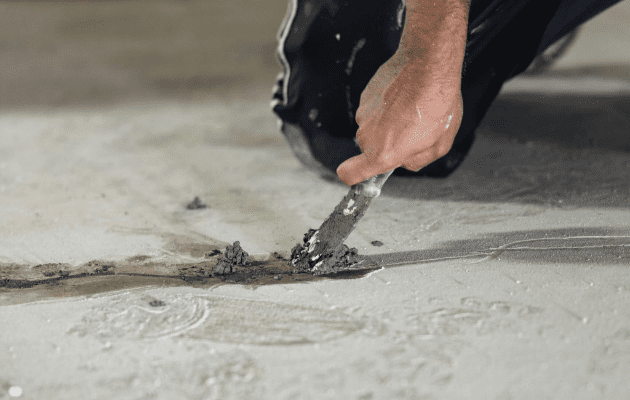
Not long. A slab leak saturates the soil under your foundation continuously, and North Texas clay reacts to that moisture by swelling - which is what eventually shows up as cracked drywall, sticking doors, and raised or buckling flooring. The leak itself is usually the cheapest part of the problem; the foundation and flooring damage that follows is what gets expensive. If you're seeing warning signs, get it located now, even if you're not ready to commit to a repair yet.
Which one is right depends on where the leak is, how many you've had, and what's on your floor. We explain the pros and cons of each before you decide - that conversation happens before any work starts, not after.

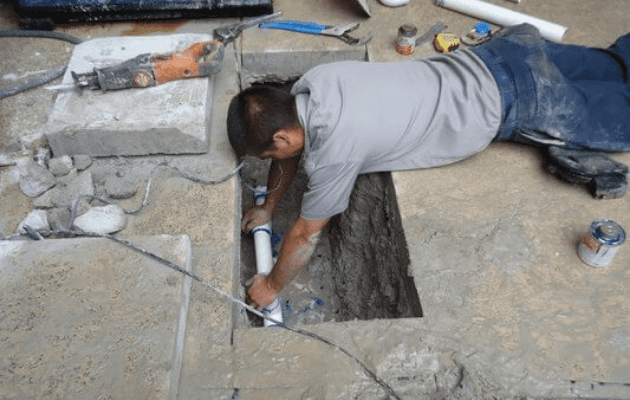
Edge leaks (under 5 ft) generally call for a tunnel. Beyond that, reroute is usually the better answer unless you have high-end flooring to protect. One Carrollton home had 15 leaks in 3 years - cheap copper, constant patching. They refused a reroute and spent more than a full repipe would have cost. It's already expensive; our job is to make sure it's done right the first time.
Every slab leak has its own fingerprint: concrete, soil, water chemistry, they all change how it behaves.
Every one of those factors can shift what we hear or how a leak shows itself.That's why experience matters. The equipment gets you close, but the feel of the instinct from decades under slabs finds it dead-on.
That's why we don't quote sight-unseen. Every slab, every soil type, every home tells a different story. The equipment gives us data. Experience tells us what it means.
Check your water meter: all fixtures off; if the dial spins, you've got a leak.
Hot vs Cold: shut the water-heater valve; if the dial stops, it's the hot side.
Mark warm spots: taping them helps us target faster.
Don't break concrete: we prove before cutting.
Every slab is different, so the cost comes down to a handful of variables:
We don't ballpark over the phone. Text photos to 972-492-5369 and we'll walk you through the logic.

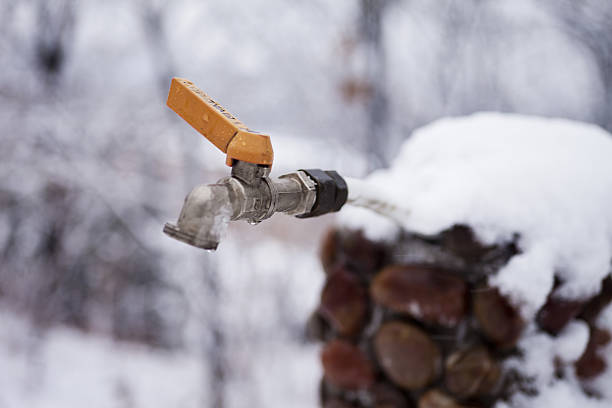
We're plumbers, not adjusters. Every policy is different - always call your agent. What we do:
We find it, fix it, and hand you the proof - nothing more, nothing less.
Under TSBPE Ch. 1301, slab-leak work must be done by a licensed plumber under a Responsible Master Plumber (RMP). Texas follows the International Residential Code (IRC); each city picks its version and amendments. We follow it - and build above it. Pressure testing, isolation, and verification are required. Skipping them can void insurance or fail inspection.
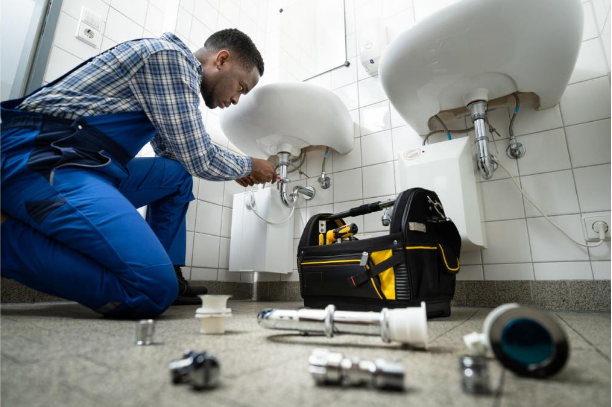
Code = minimum. Think 70 / 100 - it passes, but doesn't last. We train to exceed it. Passing isn't enough; the work should outlive the house.


Having an open and clear communication is a top priority. You can rest assure we will always provide clear communication.
Since 2003, we've been happily serving customers like you as a local, family-owned company based in Little Elm, TX.
We always put our customers first and want to ensure your needs are taken care of every time.
We are proud to offer fast, friendly, and affordable plumbing services in Little Elm, guaranteeing you are satisfied.


The plumber treated my home like his own and solved a tough drain problem.

They repaired my water heater in Carrollton and explained everything clearly.
JPS fixed my slab leak in Frisco in a single day.
“This will be the only plumbing company I ever use going forward. Highly Recommend!”
“They did a great job of scheduling and getting repairs done quickly!”
“They worked very hard all day long!”
“Jordan was Amazing!”
“The plumbers are respectful of my home and time.”
“The workmen were very polite and told me everything I needed to know.”
“They are prompt, reliable, and know what they’re doing.”
“They made us feel like they really cared about our situation.”
“Would absolutely recommend!”
“Jennings is the best!”
“That might be the fastest I’ve ever seen a plumber make it out!”
“Will definitely recommend them to others and use them again in the future.”
“He was punctual, quoted a fair price for the work.”
“Will recommend and use them again.”
Warm floors, spiking water bills, the sound of running water when everything’s off, or new cracks in your foundation or flooring.
Yes – we locate first and cut only when we’ve proven where the leak is.
Edge leaks generally mean a repair. Multiple or central leaks generally mean a reroute.
Detection takes 1-3 hours. A repair runs half a day to 2 days; a reroute runs 1-3 days.
Maybe. Some policies cover the resulting damage but not the detection or access work. Call your agent – we’ll document everything for the claim.
Most slab leak repairs and reroutes require a permit, and requirements vary by city. We handle the permitting as part of the job as needed.
Fix the leak first. Repairing a foundation while water is still saturating the soil underneath it means the movement continues and the foundation work doesn’t hold.
We back our slab leak repairs with a 1-year warranty. Please note that coverage does not apply to repairs that fail due to subsequent foundation or house movement.
Yes.

Don’t let clogged Slab Leak Plumbing disrupt your day. Call Jennings Plumbing Services at 972-492-5369 for expert.

Copyright © 2026 Jennings Plumbing Services. All Rights Reserved.

 972-492-5369


 SCHEDULE APPOINTMENT


